Peripheral Vision: Detecting Retinal Tears with the Indirect Ophthalmoscope
According to a study published in the Ophthalmology Science in 2022, at least 10 in 100,000 Americans suffer from retinal tears and detachment issues every year, primarily due to advancing age. The issue is so severe that it can lead to permanent and irreversible blindness if left undiagnosed and untreated. Furthermore, it is important to note that a retinal tear is typically painless, giving the patient no serious indication of a developing eye condition. Therefore, regular eye examination, using both the direct and indirect ophthalmoscopes, is compulsory for its early detection, especially among the elderly.
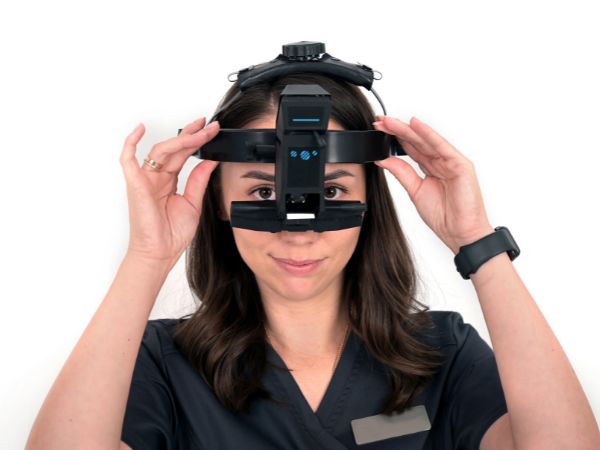
Binocular indirect ophthalmoscopes are the gold standard for the diagnosis of retinal tears
In this article, we will go through the role of indirect ophthalmoscopes in the detection of retinal tears. In addition, some of the well-known ophthalmoscope brands have also been linked for the reader’s convenience.
What is Ophthalmoscope Examination?
An ophthalmoscope examination, also known as ophthalmoscopy or fundoscopy, is a method of looking into a person’s eyes so that any abnormalities or diseases can be diagnosed, especially at their earlier stages. The fundus of the eye that includes the retina (third layer of the eye), macula, optic disc, fovea, and blood vessels in the area is particularly focused on during the examination.
Types of Ophthalmoscopes
When it comes to ophthalmoscopes, the ophthalmologists or optometrists have two types of devices to choose from. These include direct ophthalmoscopes as well as indirect ophthalmoscopes. Where direct ophthalmoscopes allow the generation of an upright and unreversed image, the indirect ones produce a real and inverted version. For the sake of this article, let us dive into more detail about the indirect ophthalmoscopes in the following sections.
What are Indirect Ophthalmoscopes?
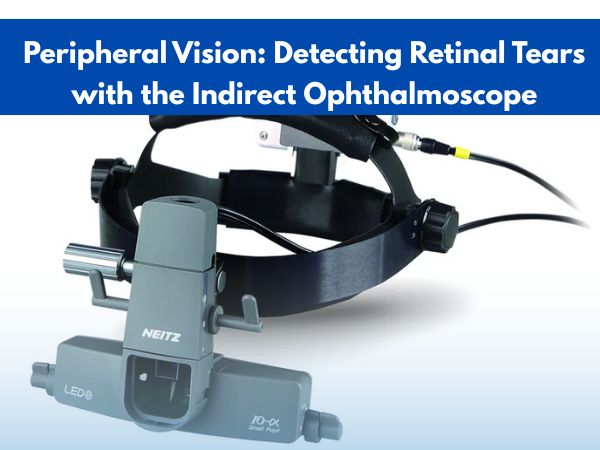
Indirect ophthalmoscopes, or binocular indirect ophthalmoscopes (BIO), are portable eye examination tools that generate a 3-dimensional (3D) image of the internal eye for the examiner to see and make a diagnosis. Instead of holding them in one hand, the indirect ophthalmoscopes are to be worn over the eyes due to their head-mountable construction.
A light source is also present in the system that illuminates the fundus and produces a wider and clearer view of its structures. The method is particularly useful when it comes to analyzing the peripheral retina, which is not properly observable with a standard direct ophthalmoscope. This is because indirect ophthalmoscopes provide a wider view of the area, (i.e., around 37 degrees wider), as compared to that generated using a direct ophthalmoscope.
How Does an Indirect Ophthalmoscope Work?
During a retinal examination, an indirect ophthalmoscope is worn by the examiner over her head. This component contains a light source and mirrors. Once in place, it should be ensured that the eyepieces are centered with the eyes. Then the light is turned on, and brightness is adjusted depending on the requirements of the procedure.
Now, the red reflex is to be found in the pupil. A convex or condensing lens is used by the examiner to focus light into the patient’s eye to allow the generation of an image. This lens is also moved closer or farther away from the eye until a clear view of the retina is achieved. To avoid any glare, the lens is slightly tilted while keeping the light, lens, and retina perfectly aligned.
At this point, observations are made regarding the condition of the optic disc and macula. Ask the patient to look in different directions so that the periphery can be fully examined.
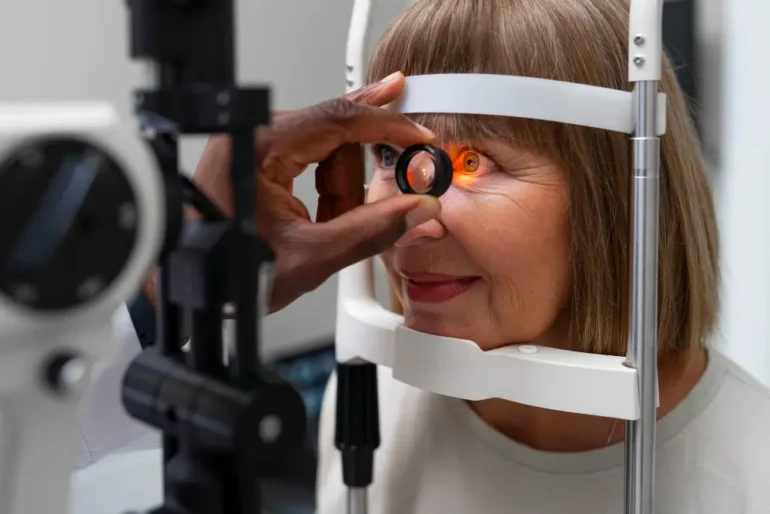
Retinal tears and detachments are common among the elderly
Using an Indirect Ophthalmoscope: Purpose and Benefits
Indirect ophthalmoscopes are widely used in healthcare facilities to conduct eye examinations, which lead to the diagnosis of several eye disorders. Moreover, the benefits achieved by their employment are numerous. Let’s get into them:
Purpose
- The primary use of indirect ophthalmoscopes in healthcare is in the diagnosis of retinal tears, holes, and detachments (more on this in the given sections).
- Indirect ophthalmoscopes can also detect the alterations in the fundus when the retinal blood vessels are affected, primarily due to diabetic retinopathy.
- Conditions like macular degeneration, which are associated with wasting away of the macula, can also be diagnosed with the help of indirect ophthalmoscopes. Similarly, optic atrophy or other nerve diseases can also be detected.
- With the use of indirect ophthalmoscopes, the extent as well as the location of the lesions in the retina can also be estimated.
- The healthcare providers also use indirect ophthalmoscopes for eye assessment in patients with glaucoma.
Benefits
- An indirect ophthalmoscope allows a wider field of view during the retinal examination, which indicates that more of the retina can be viewed by the examiner at once.
- The 3D vision feature of these devices offers an in-depth perception so that the internal lesions can be diagnosed.
- The device is also considered ideal for eye examination among patients with cloudy eyes due to cataracts or the presence of blood.
- By using an indirect ophthalmoscope, even the extreme edges of the retina can be visualized.
- As indirect ophthalmoscopes are portable, they can be used during remote patient evaluation.
- The product is also preferred when it comes to dealing with less cooperative patients, such as babies and children.
Detection of Retinal Tears Using an Indirect Ophthalmoscope
As mentioned earlier, the primary use of indirect ophthalmoscopes is to detect retinal tears and detachments. In this regard, let’s first learn what retinal tears are:
What are Retinal Tears?
The retina is a light-sensitive tissue present at the back of the eye, often known as the third layer. Being rich in rod and cone cells, the retina enables a person to see in the dark as well as during the day. However, in some cases, this retina breaks, rips, or pulls away from the underlying tissue, causing symptoms, like blurred vision, the appearance of sudden light flashes, or dark shadows in the side eye. In addition, a sudden increase in eye floaters is also noticed.
If the condition is left undiagnosed and subsequently untreated, there is a risk of the seeping of vitreous gel in this newly formed gap between the retina and its underlying tissue, leading to detachment and permanent blindness. Hence, a timely diagnosis becomes a necessity.
Retinal Tears and Indirect Ophthalmoscope
An indirect ophthalmoscope is considered a gold standard for the detection of retinal tears and detachments. This is because of the device’s ability to provide a wider, 3D view of the retinal area, including its peripheral parts. As the issue of retinal tear and detachment often starts at the periphery, the indirect ophthalmoscopes allow its detection at earlier stages with high accuracy.
This kind of in-depth retinal analysis cannot be performed using a standard direct ophthalmoscope, as it only offers a 2D visualization of the area which is insufficient for seeing the retinal edges. However, in the case of indirect ophthalmoscopes, it is possible to have a wider field of view for systematic examination of the entire retinal area.
In addition, as indirect ophthalmoscopes also allow the retinal examination among patients with cloudy eyes, their usefulness further increases as such kind of examination is not possible with a standard direct ophthalmoscope.
To further increase the effectiveness of indirect ophthalmoscopes, these can also be paired with scleral indentation or depression, a technique associated with applying a gentle pressure on the sclera, often through the eyelid, the outer layer of the eye. This way, the view of the peripheral retina becomes even clearer and, therefore, allows quick and precise diagnosis.

Indirect ophthalmoscopy allows an in-depth analysis of retina, leading to precise diagnosis of eye diseases
Ophthalmoscopes and Related Parts at Health Supply 770: Features and Specifications
Ophthalmoscopes are the eye examination tools that are employed within healthcare facilities to diagnose medical conditions affecting the retina. These are easy-to-use systems that visualize the eye fundus and, therefore, allow the examiner to look into the internal parts.
However, when it comes to learning about indirect ophthalmoscopes, it is also essential to look into some of the products that many brands manufacture. Some of these well-known ophthalmoscopes and their related parts are also available at Health Supply 770 and have been detailed below, along with their features and purchase links:
Welch Allyn Coaxial Ophthalmoscope for Eye Examination– 3.5V LED 11720-L
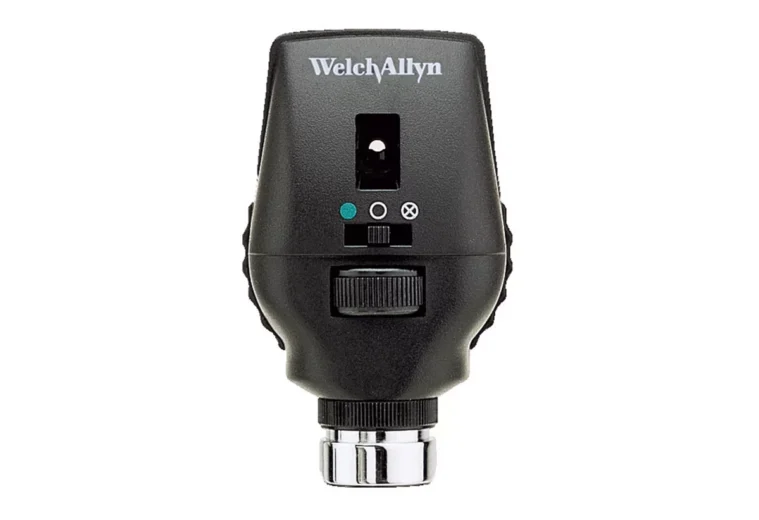
Welch Allyn Coaxial Ophthalmoscope for Eye Examination– 3.5V LED 11720-L
US$264.88
Product Details
Welch Allyn coaxial ophthalmoscopes are the handheld medical tools that are employed for the examination of eye fundus, i.e., the retina, its blood vessels, fovea, macula, and optic nerve, to diagnose any abnormalities or disease states. The device is so designed that it can allow the examiner to see a high-quality image of the internal eye that is glare-free as well. Therefore, the chances of seeing a blurred or distorted image are minimal, leading to an accurate diagnosis.
In addition, the 3.5V LED light source that comes with these Welch Allyn coaxial ophthalmoscopes is long-lasting, a feature that reduces the need of frequent battery changes. To meet all the diagnostic needs within a healthcare facility, the 18 unique apertures or filter combinations are provided with the device. Overall, the product is efficient in its performance and can be employed with all kinds of relevant Welch Allyn equipment.
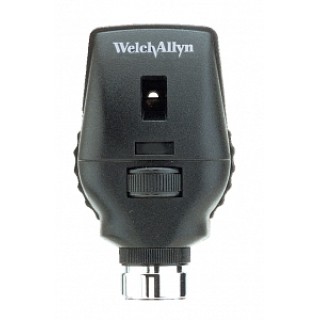
Welch Allyn 11710 Halogen Ophthalmoscope Head – 3.5V
US$182.88
Product Details
Welch Allyn 11710 halogen ophthalmoscope heads are medical tools that are considered one of the most precise and reliable eye examination devices. The device comes with a source of bright light that illuminates the fundus of the eye, allowing the examiner to diagnose conditions and abnormalities associated with the retina, its blood vessels, optic disc, etc.
Moreover, these Welch Allyn 11710 halogen ophthalmoscope heads are lightweight systems that are highly durable. These can be attached to the Welch Allyn diagnostic handles, as both products use a 3.5V power source for their operation.
Furthermore, considering their usefulness and consistency, these Welch Allyn 11710 halogen ophthalmoscope heads are widely employed in primary care, optometry, as well as specialty practices. During patient assessment, the product also ensures a superior light transmission.
Welch Allyn 03000U6 3.5V Halogen Lamps, Ophthalmoscope for 11710/8000, BX6
https://hs770.com/product/welch-allyn-03000u63-5v-halogen-lamp-ophthalmoscope-for-11710-8000-bx6/
https://hs770.com/product/welch-allyn-halogen-bulb-for-ophthalmoscope/
Product Details
Welch Allyn 03000U6 3.5V halogen lamp for ophthalmoscopes is a product designed to provide the light necessary for illuminating the eye during a fundus examination. These instruments come with a bi-pin base that further has two small pins. The purpose of these is to allow the attachment of the device to other Welch Allyn products.
Moreover, when it comes to comparing these Welch Allyn 03000U6 3.5V halogen lamps for ophthalmoscopes with the incandescent bulbs, it is revealed that the prior can provide illumination for up to 2000 hours. This way, the need for frequent recharging or replacement is eliminated. In addition, the halogen bulbs of these Welch Allyn 03000U6 3.5V halogen lamps are either single or double-coiled.
*Note: The prices mentioned in the article are taken from the Health Supply 770 website. These may vary over time.

Pupil-dilating drops are often administered before the BIO
The products linked in the article, while learning about indirect ophthalmoscopes, along with many other medical supplies, can be purchased from Health Supply 770, a reliable name when it comes to medical products. They have a 30-day money-back guarantee and provide your products to you in the shortest possible time. Click the link at the end of the article to check the wide range of eye examination products.
Conclusion
With advancing age, issues like retinal tears and detachments become quite common among the elderly. The conditions affect the retina, particularly its peripheral areas, and can lead to permanent blindness if left untreated. As the treatment must be preceded by proper diagnosis, the use of indirect ophthalmoscopes is considered a gold standard in this regard.
This is because indirect ophthalmoscopes allow the viewing of the retinal periphery, which cannot be done while using a standard direct ophthalmoscope. Furthermore, the device also provides a clear and precise image of the retinal area, including its blood vessels, fovea, macula, and optic disc, leading to a quick and precise diagnosis of other eye-related conditions as well.
Considering their importance, ophthalmoscopes are an integral part of eye examination and are, therefore, needed within all the relevant healthcare facilities. For purchasing different kinds of medical devices, including indirect ophthalmoscopes, reliable vendors like Health Supply 770 should be approached. They ensure the provision of quality products along with satisfactory services.
References