Why the Laser Indirect Ophthalmoscope is Revolutionizing Peripheral Retinal Care
According to a study published in JAMA Ophthalmology, 9.60 million people in the US were diagnosed with diabetic retinopathy in 2021. Among them, 1.84 million were at a high risk of vision loss. Although the condition is not fully reversible, it can be managed with the help of laser indirect ophthalmoscopes (LIO) to prevent progression. But what are these eye examination tools, and how do they differ from standard indirect ophthalmoscopes?

Lasers are frequently used for fixing damaged eye tissues
In this article, we will go through the benefits of laser indirect ophthalmoscopes in peripheral retinal care. In addition, some of the well-known ophthalmoscope brands have also been linked for the reader’s convenience.
What is Ophthalmoscope Examination?
An ophthalmoscope examination, also known as ophthalmoscopy or fundoscopy, is a method of looking into the eye so that a diagnosis can be made either of the eye diseases or of the signs that indicate problems in other body organs. As the procedure merely takes 10 to 15 minutes, it is not tiring for the patients as well as for the ophthalmologists.
The basic principle of both the direct and indirect ophthalmoscopes is the same and revolves around shining a bright light from a source on the eye fundus, leading to its illumination. The method is effective in the detection of conditions, like glaucoma, macular degeneration, diabetic retinopathy, etc.
What are Indirect Ophthalmoscopes?
Indirect ophthalmoscopes are small-sized, portable eye examination tools that are used for the examination of the peripheral parts of the fundus. These systems can provide a 3-dimensional (3D) view of the internal parts of the eye and, therefore, allow an in-depth evaluation of the area. In particular, parts of the eye fundus are specially focused, including the retina, retinal blood vessels, fovea, macula, and optic nerve.
As the instrument is head-mounted, there is no need to hold the device in one hand during the procedure. A light source present in the indirect ophthalmoscope illuminates the area, while the examiner can see a wider (i.e., around 37 degrees wider) and clearer view of the internal structures, particularly of the edges of the retina that are impossible to see using a direct ophthalmoscope.
What are Laser Indirect Ophthalmoscopes?
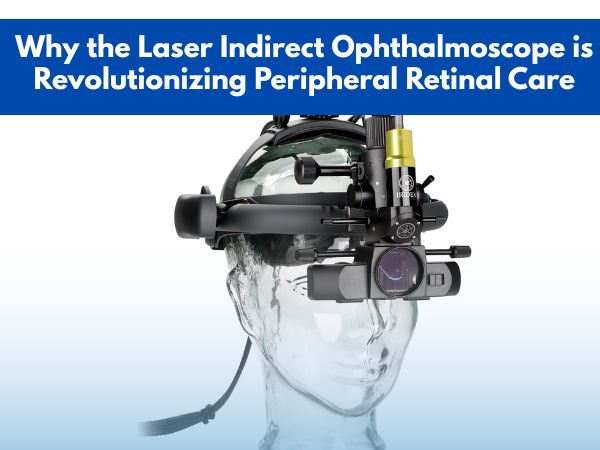
Laser indirect ophthalmoscopes (LIO) are the headset-mounted, portable systems that ophthalmologists use to examination the peripheral parts of the retina, the third layer of the eye. These are different from the standard laser ophthalmoscopes as a focused laser beam is incorporated in their design. This beam is useful in terms of offering treatment along with the diagnosis of conditions, like retinal tears, diabetic retinopathy, and vitreous hemorrhage, through a process called photocoagulation.
How Do Laser Indirect Ophthalmoscopes Work?
Laser indirect ophthalmoscopes come with two main components, i.e., a head-mounted, binocular viewer that has a coaxial laser beam and a handheld condensing or convex lens. The head-mounted binoculars further contain lenses and mirrors that provide a stereo vision of the retina. In addition, a source of bright light contained in the binocular passes through these lenses and mirrors and reaches the back of the eye, causing it to illuminate.
Now, once the area is in focus, a laser beam reaches the eye fundus while traveling in the direction of the surgeon’s viewing axis. To further guide this laser, a visible aiming beam, often red in color, also travels along with it. With the help of the handheld convex lens, the focus of this laser is adjusted until a clear, magnified, and inverted view of the area is achieved.
Once a diagnosis has been made, the surgeon can move the head to change the position of the laser beam coming from the laser indirect ophthalmoscope. When properly set at the target location, this laser beam leads to controlled thermal burns on certain parts of the retina through a process known as photocoagulation.
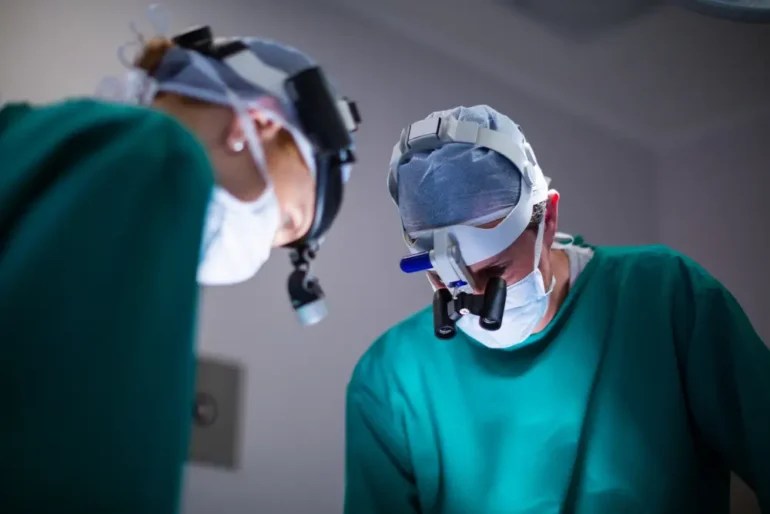
Binoculars of the LIO allow the diagnosis and treatment of retinal tears
Laser Indirect Ophthalmoscopes and Peripheral Retinal Care
Laser indirect ophthalmoscopes are widely employed in eye care practices due to their ability to diagnose and treat multiple eye conditions. When it comes to retinal care, the following benefits can be achieved from the device:
Management of Retinal Tears
Retinal tears occur when the vitreous body in the eye starts pulling away from the underlying tissue. If the condition remains undiagnosed and untreated, it can lead to retinal detachment which is associated with permanent and irreversible blindness. However, with the help of laser indirect ophthalmoscopes, retinal tears can be treated.
As the problem usually starts at the edges of the retina, the instrument gives a peripheral retinal view that eases diagnosis. Furthermore, the laser beam from the LIO reaches the periphery and patches the torn tissues. During this process, the laser also burns the tissues, leading to their sealing. This way, further tearing, detachment, and, subsequently, vision loss are effectively prevented.
Peripheral Retinal Hemorrhage
Peripheral retinal hemorrhage is an eye condition associated with bleeding in the outer part of the retina, specifically in the peripheral region. It usually occurs in patients who are suffering from conditions, such as diabetes, trauma, systemic and retinal vascular disease, high blood pressure, or blockage of the veins.
If the condition progresses, the risk of retinal detachment becomes significant. As the peripheral retinal hemorrhage can affect infants, babies, as well as adults, it needs proper diagnosis and treatment.
In this regard, laser indirect ophthalmoscopes are employed to reduce the formation of new blood vessels in the area. This way, the overall oxygen demand in the retina is reduced, which subsequently lessens the hemorrhage.
Lattice Degeneration
Lattice degeneration is a condition associated with the thinning and weakening of the peripheral retina. As the name suggests, this degeneration leads to the appearance of a lattice-like pattern on the edges of the retina. The condition, however, does not cause any symptoms and is, therefore, difficult to diagnose until visualized during an eye examination.
With the help of laser indirect ophthalmoscopes, these degenerated areas are not only accurately visualized but also healed. The laser beam seals the lattice lesions as well as the surrounding tissues, leading to a reinforcement of the retina.
Diabetic Retinopathy
Diabetic retinopathy, or DR, is a complication that comes with chronic diabetes. In such cases, the blood vessels of the retina get damaged, leading to their swelling and leakage. As a result, floaters in the eyes become prominent, and the condition can worsen to cause blurry vision or even blindness.
Here, the role of laser indirect ophthalmoscopes is to stop this leakage by a process called panretinal photocoagulation (PRP). The method involves the application of a laser to cause numerous small burns in the peripheral retinal area so that the formation and growth of new abnormal blood vessels can be prevented. This way, vision loss is prevented.

Pupil dilation before the LIO is done to achieve a clearer retinal view
Ophthalmoscopes and Related Parts at Health Supply 770: Features and Specifications
Ophthalmoscopy is a method of examining the fundus of the human eye with the aim of diagnosing any abnormalities or diseases at their earlier stages. The method is easy to conduct and does not take much time, leading to its extensive use. Both direct and indirect ophthalmoscopes are available for healthcare providers to choose from.
However, when it comes to learning about laser indirect ophthalmoscopes, it is also essential to look into some of the products that many brands manufacture. Some of these well-known ophthalmoscopes and their related parts are also available at Health Supply 770 and have been detailed below, along with their features and purchase links:
Welch Allyn Coaxial Ophthalmoscope for Eye Examination– 3.5V LED 11720-L
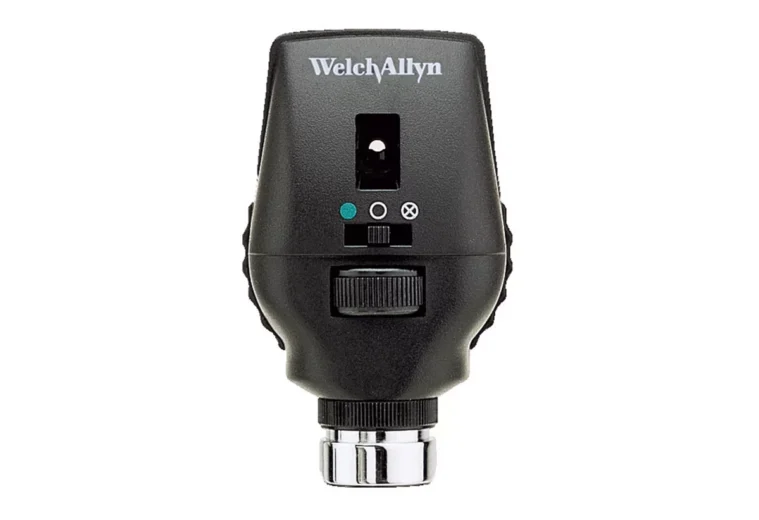
Welch Allyn Coaxial Ophthalmoscope for Eye Examination– 3.5V LED 11720-L
US$264.88
Product Details
Welch Allyn coaxial ophthalmoscope is a handheld medical tool that is used for visualizing the fundus during an eye examination. The product is widely employed owing to its ability to provide high-quality visuals and clear images of the internal parts of the eye, including the retina, its blood vessels, fovea, macula, and optic nerve.
A common issue during an eye examination is the shadow or glare that hinders the view for the examiner and might lead to inaccurate conclusions. In this regard, these Welch Allyn coaxial ophthalmoscopes offer a shadow-free as well as glare-free viewing of the eye fundus. As a result, an in-depth eye examination can also be performed within 10 to 15 minutes and reliable results can be obtained.
In addition, the light source of these Welch Allyn coaxial ophthalmoscopes, a 3.5V LED, is long-lasting as it offers the conduction of multiple examinations without the need of battery change or recharging. Moreover, these Welch Allyn coaxial ophthalmoscopes also come with 18 unique apertures or filter combinations to allow the examiner to meet varying diagnostic needs within a healthcare facility.
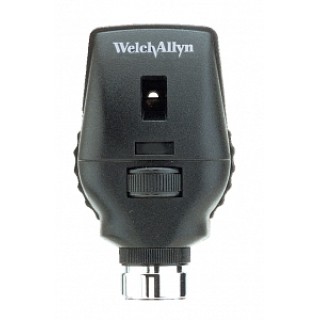
Welch Allyn 11710 Halogen Ophthalmoscope Head – 3.5V
US$182.88
Product Details
Welch Allyn 11710 halogen ophthalmoscope head is an eye examination tool that is known for its high performance when it comes to visualizing the eye fundus. The device comes with a source of bright light that illuminates the retina, its blood vessels, optic disc, macula, and fovea, and allows an accurate and reliable examination.
Moreover, these Welch Allyn 11710 halogen ophthalmoscope heads are lightweight, portable, and easy to operate. Their high durability and compatibility with Welch Allyn diagnostic handles, possibly due to similar power requirements of 3.5V, expands their overall applications.
Furthermore, these Welch Allyn 11710 halogen ophthalmoscope heads also offer a superior light transmission when an eye examination is being conducted. Owing to their prominent features and ease of usage, the product is extensively employed in optometry, primary care, as well as specialty practices.
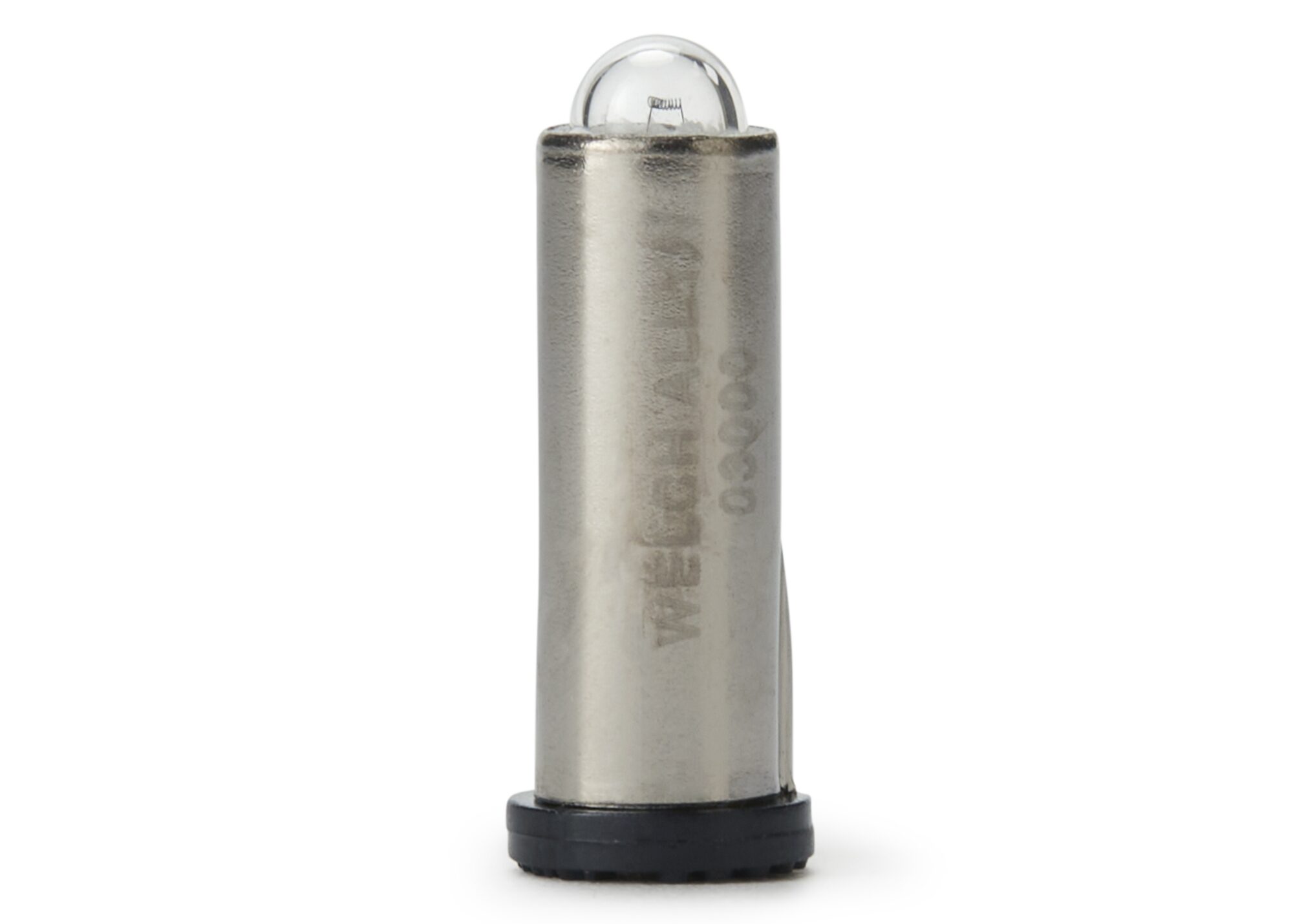
Welch Allyn 03000U6 3.5V Halogen Lamps, Ophthalmoscope for 11710/8000, BX6
Product Details
Welch Allyn 03000U6 3.5V halogen lamp for ophthalmoscopes is the medical tools that act as a source of bright light during an eye fundus examination or fundoscopy. These are used along with ophthalmoscopes, to which they are attached using a bi-pin base that comes with two small pins.
Moreover, these Welch Allyn 03000U6 3.5V halogen lamps are known to last longer when compared to traditional incandescent bulbs. Their efficiency is so that they can be used for up to 2000 hours. Furthermore, the halogen bulbs that are employed used in these products are of a single or double-coiled nature.
*Note: The prices mentioned in the article are taken from the Health Supply 770 website. These may vary over time.

The risk of retinal tears and detachments increases with advancing age
The products linked in the article, while learning about laser indirect ophthalmoscopes, along with many other medical supplies, can be purchased from Health Supply 770, a reliable name when it comes to medical products. They have a 30-day money-back guarantee and provide your products to you in the shortest possible time. Click the link at the end of the article to check the wide range of eye examination products.
Conclusion
Eye diseases are often common to occur but difficult to diagnose and treat. This is because, in many cases, there are no prominent symptoms associated with the condition. As a result, the patient does not feel pain or discomfort, which can lead to scheduling a visit to an ophthalmologist.
Here, the role of regular eye examinations becomes important. In this regard, instruments, like laser indirect ophthalmoscopes, are extensively used that not only diagnose retinal issues but are also capable of treating them using a laser beam. As compared to the standard indirect ophthalmoscopes, laser indirect ophthalmoscopes specialize in the examination of peripheral parts of the retina that are usually hard to visualize.
Considering their importance, laser indirect ophthalmoscopes are an integral part of eye examination and are, therefore, needed within all the relevant healthcare facilities. For purchasing different kinds of medical devices, including laser indirect ophthalmoscopes, reliable vendors like Health Supply 770 should be approached. They ensure the provision of quality products along with satisfactory services.
References
https://jamanetwork.com/journals/jamaophthalmology/fullarticle/2806093