The Ophthalmoscope Exam: A Window to Your Patient’s Cardiovascular Health
According to the Centers for Disease Control and Prevention (CDC), heart disease is the leading cause of death in the US among both men and women. The statistics indicate that one person dies every 34 seconds from a cardiovascular disease. The only effective preventive measure is to take essential diagnostic tests, including an ophthalmoscope exam that can detect cardiovascular issues even at their earlier stages.
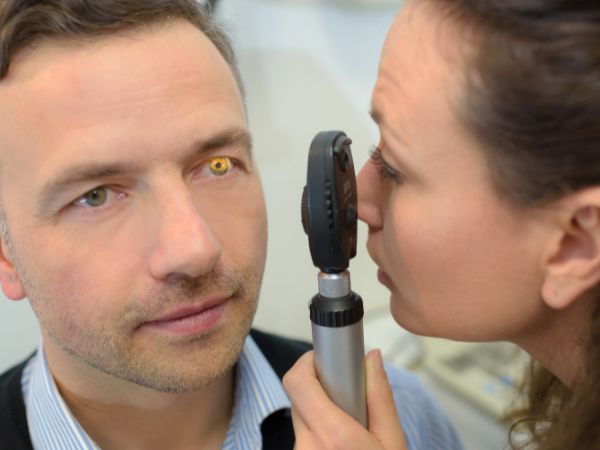
An ophthalmoscope exam gives valuable insights into a patient’s heart health
In this article, we will go through the importance of conducting an ophthalmoscope exam to diagnose heart disorders. In addition, some of the well-known ophthalmoscope brands have also been linked for the reader’s convenience.
What is an Ophthalmoscope Exam?
An ophthalmoscope exam, commonly known as ophthalmoscopy or fundoscopy, is a method of looking into the fundus of the eye to check for any abnormality or a disease state. As the eye fundus consists of the third layer of the eye, known as the retina, along with the macula, optic disc, fovea, and blood vessels, the examination can reveal a significant amount of information regarding their condition.
What are Ophthalmoscopes?
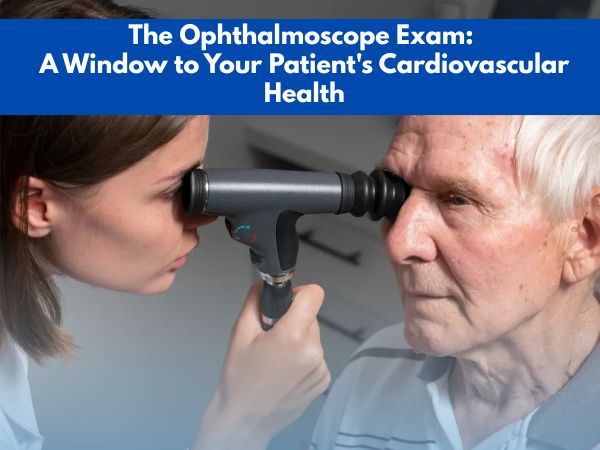
To conduct an ophthalmoscope exam, a handheld instrument known as an ophthalmoscope is used. Ophthalmologists or optometrists use them to examine the inside of the human eye. The device uses a light source to illuminate the eye fundus while the examiner is looking through the viewing aperture.
A system of mirrors, lenses, and apertures focuses this light on the observer’s eye to create a magnified view of the internal structures. Possible refractive errors are also adjusted to ensure a clear view.
Understanding the Connection between the Eyes and the Heart
Arterial Connection
The connection primarily comes through the ophthalmic artery that supplies blood to the eyes as it is formed through the branching of the internal carotid artery, which is itself a branch of the common carotid artery coming from the aortic arch.
Why is it related? The answer is simple. The pressure of the blood in the ophthalmic arteries is directly dependent on the blood pressure in the arteries around the heart. This way, an estimation of the effects of this pressure on the blood vessels can be made.
Shared Vasculature
In addition, our eyes are also connected to the heart by a shared vasculature system. It is a network of tiny blood vessels (also called retinal vasculature) present at the back of the retina that resembles those present in the heart. Due to their similar size, these blood vessels serve as a useful model for studying the microcirculation in the body.
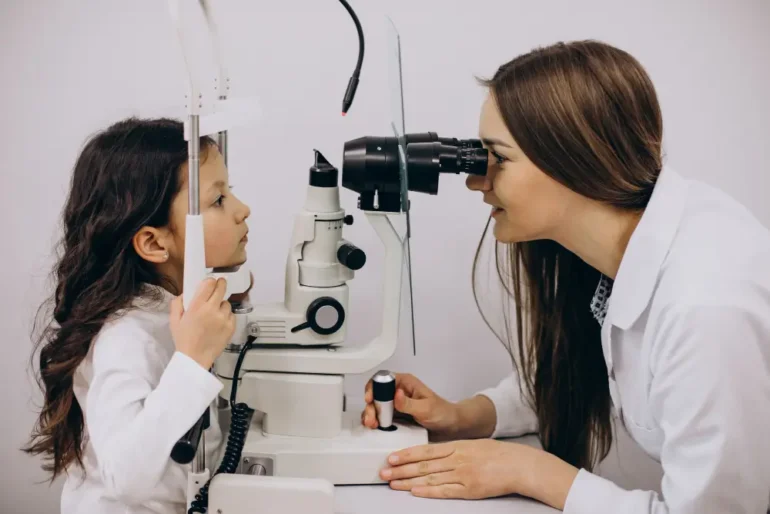
An ophthalmoscope exam reveals the signs of heart diseases, diabetes, and anemia, among other issues
Ophthalmoscope Exam and Cardiovascular Problems
When it comes to taking an ophthalmoscope exam, there may be several reasons behind its recommendation. This is because the condition of the retinal blood vessels can reveal useful information regarding other body parts, in addition to the eye fundus. In this regard, an estimation of a person’s cardiac health can also be made with the help of an ophthalmoscope exam. Let us learn how it is done:
Alteration in Retinal Blood Vessels
If the condition of the human heart starts to worsen for one reason or another, an ophthalmoscope exam can detect it even at its earlier stages. For instance, if a patient has atherosclerosis (a condition associated with the deposition of fats on the inner side of the arteries), the retinal blood vessels appear as narrowed, twisted, or damaged during an ophthalmoscope exam.
As retinal vasculature is similar to that of the heart, these changes in the retinal blood vessels often reflect similar changes in the coronary arteries, suggesting atherosclerosis.
Cotton Wool Spots on the Retina
In some cases, small, white-colored, fluffy-looking spots appear on the retina. These occur due to a reduced blood flow to the retinal nerve fibers, leading to a reduced oxygen supply (ischemia). As these cotton wool spots do not affect vision, the patients do not report them on their own. Rather, these are only revealed during an ophthalmoscope exam.
However, their presence can be an indication of several cardiovascular issues, one of which is hypertension or high blood pressure. This is because higher than normal blood pressure alters the blood flow in the retina over time, resulting in a condition known as hypertensive retinopathy. In such ischemic conditions, tiny vessels of the eyes get blocked, leading to their swelling. The cellular debris then appears to be white and cottony in appearance.
Swelling of the Optic Nerve
If the optic nerve appears to be swollen, it indicates a condition known as papilledema. The condition happens due to high intracranial pressure, that is often caused due to extremely high blood pressure. This is because uncontrolled and severely high blood pressure in the brain puts pressure on the optic nerve, leading to its swelling.
When swelling in the optic nerve is detected, there is a need to check the blood pressure and reduce it until it falls within the normal range. The situation is treated as a medical emergency as prolonged exposure to extremely high blood pressure pushes the patient’s body towards stroke, heart failure, kidney failure, heart attack, as well as vision loss.
Presence of Emboli in Retinal Blood Vessels
In some cases, tiny cholesterol aggregates or blood clots are visible when the retinal blood vessels are examined. These are emboli, the structures that travel in the blood vessels and causing blockages at certain points.
As the presence of fat is one of the biggest precursors of emboli formation, its higher levels are indicated. This identification is so crucial that it can also be taken as a warning sign of similar blockages in the coronary artery.
Microaneurysms in Retinal Blood Vessels
Microaneurysms in the retinal blood vessels are small-sized bulges that indicate systemic damage in the blood vessels associated with the heart. These occur due to the dilation of the walls of capillaries in the retina. Owing to their tiny sizes, i.e., 25 to 100 µm, these bulges are only visible during an ophthalmoscope exam when done after using pupil-dilating drops.
The connection of these microaneurysms with the condition of the heart is well-established, as hypertension is the primary cause of their formation. In addition, hardening and narrowing of the arteries near the heart (atherosclerosis) also results in the blockage of retinal vessels (known as eye strokes), which further causes microaneurysm.
Ophthalmoscope Exam for Cardiovascular Conditions: What’s Next?
Once a patient has taken an ophthalmoscope exam, the next step is to take doctor’s recommendation. She can either prescribe some medications or ask you to take more tests to confirm the primary diagnosis.
This way, when the results of the ophthalmoscope exam are combined with other diagnostic tests, a clear picture of the patient’s cardiac health is revealed to the healthcare provider. Furthermore, your ophthalmologist might also refer you to a primary care physician (PCP) or even a cardiologist so that further evaluation of the condition can be done.
What Can I Do as a Patient?
As a patient, you must schedule an appointment as soon as possible, as per the recommendation of your ophthalmologist. If further tests are recommended, these should be taken. Blood pressure should also be checked and recorded on a daily basis. It is also advised to keep track of what you eat and try to make the necessary lifestyle modifications.
Is an Ophthalmoscope Exam Suitable for Children?
Yes, an ophthalmoscope exam can be used among children as well when it comes to estimating the condition of their heart and blood vessels. This method is useful as it not only reveals the current condition but also lets the examiner know if there are minute alterations in the blood vessels that could lead to heart disease in the next four years.

Continuously worsening eyesight can indicate the presence of an eye disorder
Ophthalmoscopes and Related Parts at Health Supply 770: Features and Specifications
Ophthalmoscopes are the handheld instruments used for visualizing the internal parts of the human eye with the aim of making a diagnosis. These work by sending a light beam into the eye, which is reflected, followed by making an image. This way, fundus examination or fundoscopy becomes possible.
However, when it comes to learning about the ophthalmoscope exam, it is also essential to look into some of the products that many brands manufacture. Some of these well-known ophthalmoscopes and their related parts are also available at Health Supply 770 and have been detailed below, along with their features and purchase links:
Welch Allyn Coaxial Ophthalmoscope for Eye Examination– 3.5V LED 11720-L
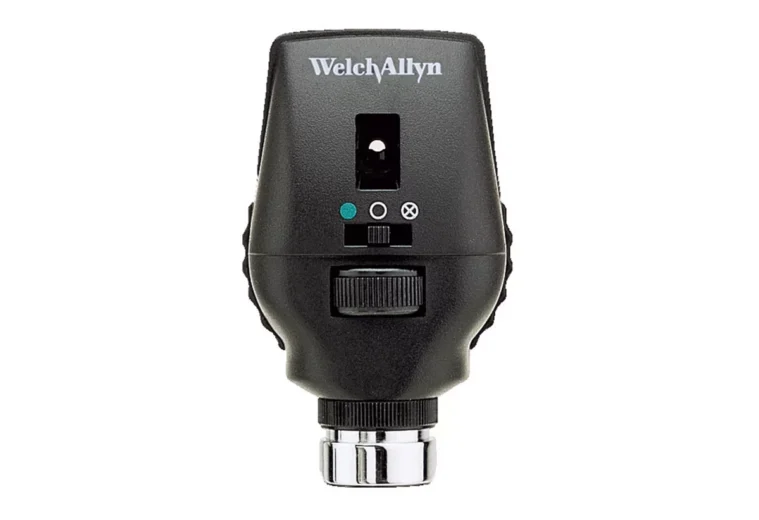
Welch Allyn Coaxial Ophthalmoscope for Eye Examination– 3.5V LED 11720-L
US$264.88
Product Details
Welch Allyn coaxial ophthalmoscope is an easy to use, handheld eye examination tool that is employed to visualize the fundus of the eye. It is used by healthcare providers to diagnose eye diseases or abnormalities with great accuracy, as the instrument allows the formation of a clear image.
In addition, the shadow-free viewing of the eye fundus also ensures that the risk of inaccurate diagnosis is minimal. Moreover, the glare-free view provided by the device also adds to the overall clarity of the image.
Furthermore, these Welch Allyn coaxial ophthalmoscopes come with 18 unique apertures or filter combinations that facilitate the fulfillment of varying diagnostic needs during eye examination. As for the light source, the product has a 3.5V LED illumination that is long-lasting, leading to a reduced need for battery change after every few days. This ophthalmoscope head can be employed with all other Welch Allyn equipment.
Welch Allyn 03000U6 3.5V Halogen Lamps, Ophthalmoscope for 11710/8000, BX6
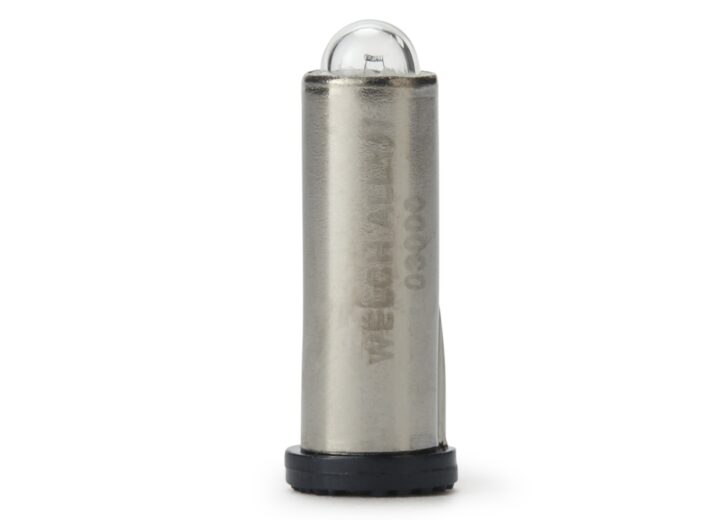
03000-U6 LAMP, HALOGEN 3.5V F/OPHTHALMO
https://hs770.com/product/welch-allyn-halogen-bulb-for-ophthalmoscope/
Product Details
Welch Allyn 03000U6 3.5V halogen lamp for ophthalmoscopes are the products used for fundoscopy which is either single or double-coiled. The device contains a bi-pin base that allows its attachment to other ophthalmoscopy devices.
Being an effective light source, these Welch Allyn 03000U6 3.5V halogen lamps provide the necessary illumination to facilitate the seeing of internal parts of the eye, i.e., the eye fundus. Moreover, these Welch Allyn 03000U6 3.5V halogen lamp for ophthalmoscopes, unlike the incandescent bulbs, can be used for up to 2000 hours due to their long-lasting nature.
*Note: The prices mentioned in the article are taken from the Health Supply 770 website. These may vary over time.
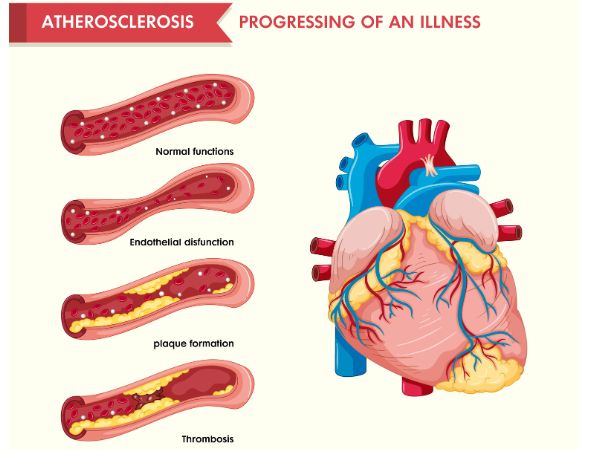
Atherosclerosis is associated with the deposition of fat in the blood vessels
The products linked in the article, while learning about ophthalmoscope examination, along with many other medical supplies, can be purchased from Health Supply 770, a reliable name when it comes to medical products. They have a 30-day money-back guarantee and provide your products to you in the shortest possible time. Click the link at the end of the article to check the wide range of eye examination products.
Conclusion
Every year, millions of people die in the US due to cardiovascular diseases. Being extremely prevalent, heart conditions are common to occur. However, they are manageable by providing proper treatments at the right time. For this, a correct and early diagnosis is necessary.
In this regard, an ophthalmoscope exam is also conducted to check the condition of the eye fundus. This is because the blood vessels of the retinal area have a close association with those present in the heart. Therefore, an estimation can be made about the condition of the heart, leading to an early diagnosis of certain cardiovascular diseases.
Considering their importance, ophthalmoscopes are an integral part of eye examination and are, therefore, needed within all the relevant healthcare facilities. For purchasing different kinds of medical devices, including ophthalmoscopes, reliable vendors like Health Supply 770 should be approached. They ensure the provision of quality products along with satisfactory services.
References
https://www.cdc.gov/heart-disease/data-research/facts-stats/index.html