Retinoscope vs. Ophthalmoscope: Clarifying the Difference in Eye Examination Tools
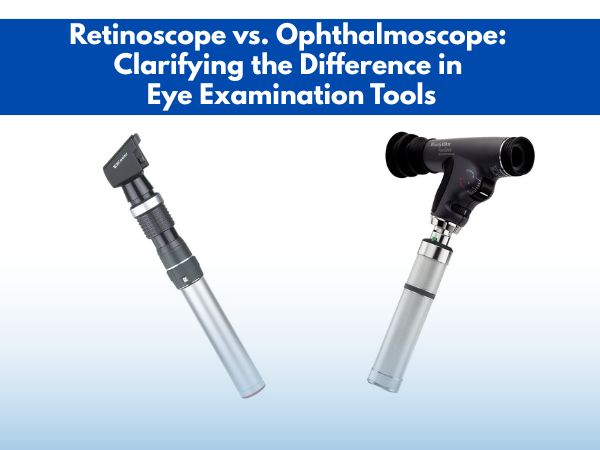
Considering the prevalence of eye conditions primarily due to excessive use of screens, it has become necessary to take regular examinations. This way, any abnormality or disease state can be diagnosed at its earlier stage, leading to timely management. In this regard, the use of a retinoscope vs. ophthalmoscopes becomes essential. But what are these eye examination instruments, and how do a retinoscope vs. ophthalmoscope differ?
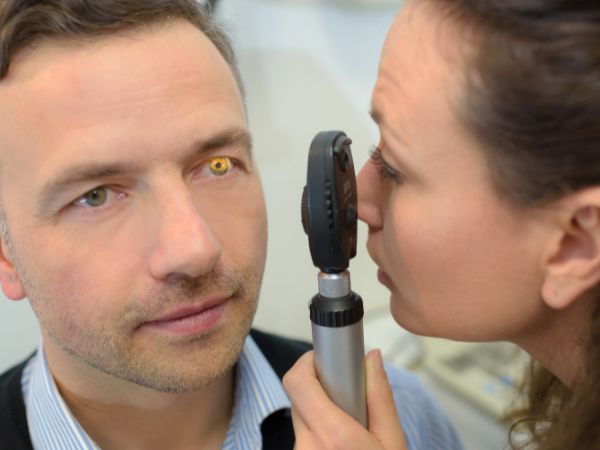
Regular eye examination helps diagnose certain diseases at their earlier stages
In this article, we will draw a comparison of a retinoscope vs. ophthalmoscopes to identify the difference in their performance when employed for eye examination. In addition, some of the well-known ophthalmoscope brands have also been linked for the reader’s convenience.
What is a Retinoscope?
A retinoscope is a device used by healthcare providers to examine the patients’ eyes before suggesting them glasses or contact lenses. The device shines a light into the eye that bounces back to reveal useful information about the focusing capability of your lens, i.e., if you are nearsighted or farsighted. Based on this refraction of light, the doctor then decides what kind of corrective lenses the patient needs.
Using a retinoscope is known as retinoscopy or skiascopy. As the procedure is easy to conduct, takes less time, and does not require the patient to cooperate much, the obtained information also becomes precise and highly accurate.
Types of Retinoscopes
Retinoscopes employed within the healthcare facilities are of two kinds:
- Handheld retinoscopes
- Automatic retinoscopes
Handheld retinoscopes are portable devices known for their ease of usage, especially while dealing with patients who cannot sit straight during the procedure, such as children, etc. However, automatic retinoscopes, on the other hand, do not require much effort from the examiner and provide quick and reliable measurements needed during a retinoscopy.
Applications of a Retinoscope
Both a retinoscope vs. ophthalmoscopes are extensively used within healthcare facilities for different reasons. Here are some of the situations where the use of a retinoscope becomes a necessity:
Measurement of the Refractive Index
While learning about a retinoscope vs. ophthalmoscopes, keep in mind that the primary purpose of using a retinoscope is for the determination of a person’s eyesight issues. This information reveals if a person is nearsighted (cannot see distant objects clearly), farsighted (cannot see closer objects with clarity), or has astigmatism or blurred vision. This way, the doctor can decide which kind of corrective lens should be prescribed.
Pre- and Post-Surgery Checks
When a person goes through an eye surgery, it becomes essential to assess the vision changes before and after the procedure. In such cases, retinoscopes come in handy as they reveal how much vision has been restored after the surgery.
Examination of Pediatric Patients
Between a retinoscope vs. ophthalmoscope, the use of retinoscopes is wider among pediatric patients. This is because kids often have trouble when it comes to explaining issues about their vision. Therefore, a sound diagnosis becomes difficult. The instruments, like retinoscopes, allow the preliminary examination to be done in no time to reveal if further testing is needed.
What is an Ophthalmoscope?
An ophthalmoscope, also known as a fundoscope or funduscope, is a handheld, eye examination tool that is used to inspect the fundus of the eye during a procedure known as ophthalmoscopy or fundoscopy. These ophthalmoscopes are paired with a light source that illuminates the area and creates a clear image of the internal parts. As a result, the examiner can see the condition of the retina, retinal blood vessels, fovea, macula, and optic disc.
As ophthalmoscopes allow the conduction of an eye examination within 10 to 15 minutes, ophthalmologists or optometrists prefer them over complex instruments when it comes to the examination of numerous eye-related conditions, like glaucoma, macular degeneration, diabetic retinopathy, etc.
Types of Ophthalmoscopes
Ophthalmoscopes can be classified into two main categories:
- Direct ophthalmoscopes
- Indirect ophthalmoscopes
Direct ophthalmoscopes are handheld systems that are used to see the fundus of the eye. Despite their easy and quick usage, these devices lack the ability to provide an image of the retinal periphery. Here, the role of indirect ophthalmoscopes becomes important as they allow the examiner to have a wider view of the internal parts of the eye.
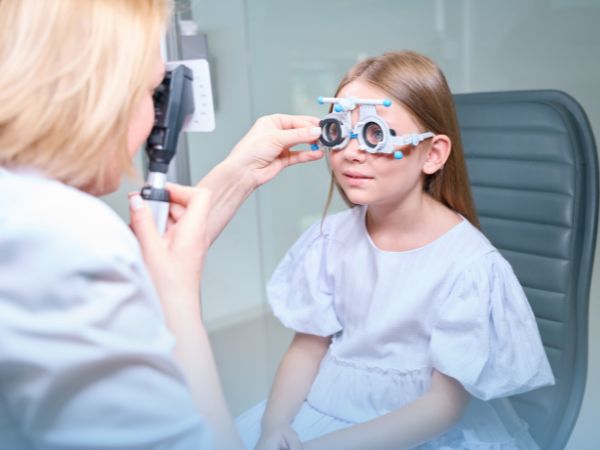
Multiple eye conditions need proper diagnosis using a retinoscope or an ophthalmoscope
Applications of an Ophthalmoscope
While discussing a retinoscope vs. ophthalmoscopes, the applications of each of these devices should also be considered and compared. In this regard, the given section summarizes some of the uses and benefits of ophthalmoscopes:
Examination of the Retina
Retina, being the third layer of the eye, is rich in photoreceptors, i.e., rod and cone cells. Where rod cells allow vision at nighttime, cone cells are responsible for making you see your surroundings during the day. However, if the retina is damaged, the ability to see objects with clarity is often affected.
In such cases, the primary use of an ophthalmoscope is to visualize the retina and detect how it has changed due to certain abnormalities associated with diseases. This way, conditions, like diabetic retinopathy, retinal tears, detachments, hemorrhage, and melanomas can be easily diagnosed.
Evaluation of the Optic Nerve
The optic nerve is the structure of the eye fundus that is responsible for building a connection between the eye fundus and the brain. It sends visual signals to the brain, where they are processed, and an image is formed. While learning about a retinoscope vs. ophthalmoscopes, keep in mind that in case of conditions, such as glaucoma, the optic nerve needs proper evaluation with the help of an ophthalmoscope to check how much it is damaged.
For instance, if the optic nerve is inflamed and has blurred margins, it may indicate papilledema. In addition, optic neuritis is indicated if the patient has vision loss associated with extreme pain in the eye.
Visualization of the Macula
Macular degeneration is a condition that is often observed among the elderly, as it is common to occur with advancing age. However, a proper diagnosis needs to be made with the help of an ophthalmoscope. In this regard, yellow deposits appear on the macula of the eye, along with leaking blood vessels, which indicate macular degeneration.
Retinoscope vs. Ophthalmoscope: Key Differences
When it comes to learning about a retinoscope vs. ophthalmoscope, both have their own pros and cons. To summarize them, the following section draws a comprehensive comparison between a retinoscope and ophthalmoscopes:
| Features | Retinoscope | Ophthalmoscope |
| Purpose | Measures the focus of the eye to determine vision prescription | Allows the visualization of the internal parts of the eye, i.e., eye fundus |
| Method | Checks how light interacts with the eye to diagnose refractive errors | Gives an estimation of the condition of the retinal tissue |
| Observation of the Red Reflex | Possibility of observing inspecting indistinct red reflex | Clear observation of the red reflex is possible |
| Conditions Diagnosed | Farsightedness, nearsightedness, blurred vision | Diabetic retinopathy, hypertension, glaucoma, macular degeneration, etc. |
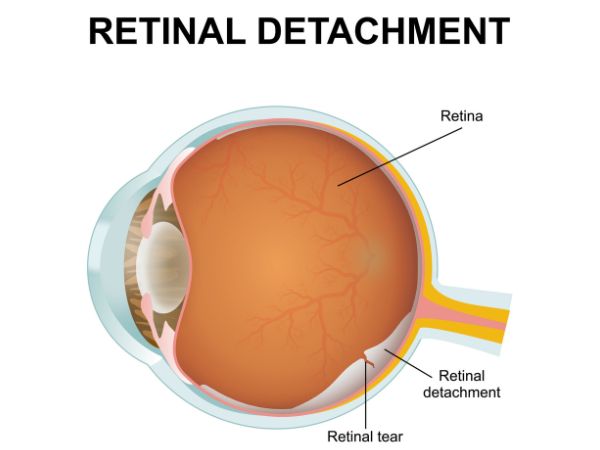
A timely eye examination helps diagnose retinal damage in its earlier stages
Ophthalmoscopes and Related Parts at Health Supply 770: Features and Specifications
An ophthalmoscope is a handheld or head-mounted eye examination instrument employed for the visualization of the fundus of the eye with the aim of diagnosing tissue abnormalities associated with certain diseases. With ophthalmoscopes, an eye examination merely takes 10 to 15 minutes, that renders them one of the most useful tools in primary healthcare facilities.
However, when it comes to learning about retinoscope vs. ophthalmoscope, it is also essential to look into some of the products that many brands manufacture. Some of these well-known ophthalmoscopes and their related parts are also available at Health Supply 770 and have been detailed below, along with their features and purchase links:
Welch Allyn Coaxial Ophthalmoscope for Eye Examination– 3.5V LED 11720-L
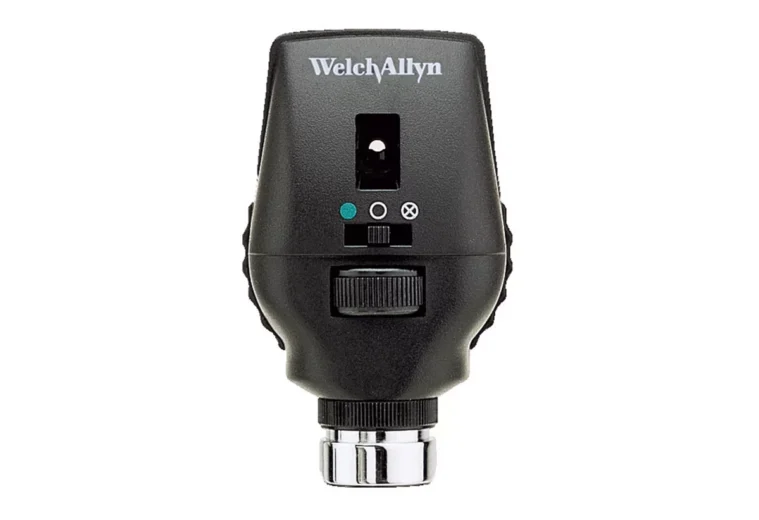
Welch Allyn Coaxial Ophthalmoscope for Eye Examination– 3.5V LED 11720-L
US$264.88
Product Details
Welch Allyn coaxial ophthalmoscope is an eye examination tool that is used for the diagnosis of conditions, like diabetic retinopathy, glaucoma, hypertension, etc. These are easy-to-use, handheld instruments that are attached to a suitable handle before an eye examination. Their primary application is to visualize the fundus of the eye by generating a clear image. This image clarity is further enhanced by the glare- and shadow-free viewing features, leading to an accurate diagnosis. Hence, an in-depth analysis is possible.
In addition, these Welch Allyn coaxial ophthalmoscopes are operated along with a 3.5V LED light source that provides long-lasting illumination during the procedure. Hence, the need for frequent battery recharging is eliminated. Due to its high compatibility with most devices, the product can be attached to all kinds of relevant Welch Allyn equipment. Moreover, while learning about a retinoscope vs. ophthalmoscopes, keep in mind that the device is capable of meeting various diagnostic needs due to the presence of 18 unique apertures or filter combinations.
Welch Allyn 11710 Halogen Ophthalmoscope Head – 3.5V
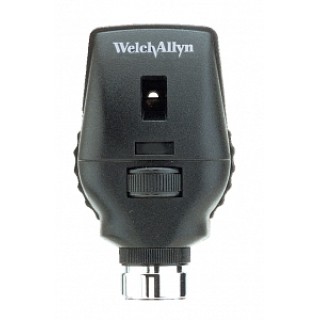
US$182.88
Product Details
Welch Allyn 11710 halogen ophthalmoscope head is an eye examination tool that generates a clear image of the eye fundus, i.e., the retina, its blood vessels, optic disc, fovea, and macula, so that proper diagnosis can be made. It is used with a source of bright light that illuminates the area to facilitate the procedure.
Moreover, these Welch Allyn 11710 halogen ophthalmoscope heads are also lightweight and compatible with the Welch Allyn diagnostic handles, primarily because of their similar power needs as both operate at a voltage of 3.5V.
Furthermore, considering their functionality, these Welch Allyn 11710 halogen ophthalmoscope heads are employed in primary care, optometry, as well as specialty practices to achieve a consistent performance. While learning about a retinoscope vs. ophthalmoscopes, keep in mind that the device also provides a superior light transmission during eye examination.
Welch Allyn 03000U6 3.5V Halogen Lamps, Ophthalmoscope for 11710/8000, BX6
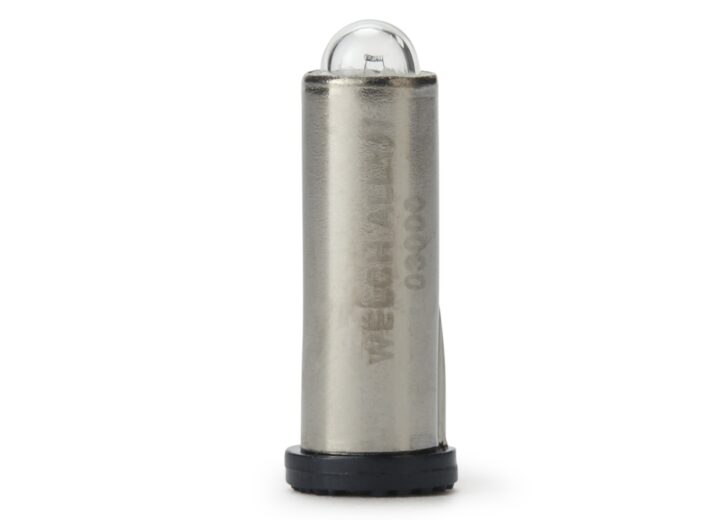
03000-U6 LAMP, HALOGEN 3.5V F/OPHTHALMO
Product Details
Welch Allyn 03000U6 3.5V halogen lamp for ophthalmoscopes are the products that act as light sources when employed with ophthalmoscopes. These send bright light into the eyes to illuminate the fundus to allow its examination. These halogen lamps come with a bi-pin comprising of two small pins that allow their attachment to other ophthalmoscope devices.
Moreover, as these Welch Allyn 03000U6 3.5V lamps for ophthalmoscopes are halogen-based, they last longer, providing nearly 2000 hours of usage without the need for replacement. This is notable as the traditionally used incandescent bulbs do not last for such a long duration. Additionally, while learning about the retinoscope vs. ophthalmoscope, keep in mind that these halogen bulbs employed with ophthalmoscopes are often single or double-coiled.
*Note: The prices mentioned in the article are taken from the Health Supply 770 website. These may vary over time.

Pupil-dilating eye drops are often used before a retinoscope vs. ophthalmoscope examination
The products linked in the article, while learning about retinoscope vs. ophthalmoscope, along with many other medical supplies, can be purchased from Health Supply 770, a reliable name when it comes to medical products. They have a 30-day money-back guarantee and provide your products to you in the shortest possible time. Click the link at the end of the article to check the wide range of eye examination products.
Conclusion
The importance of regular eye examination is undeniable, as it can reveal useful information about the condition of the fundus. When clearly observed, the abnormalities of the retina, its blood vessels, fovea, macula, and optic nerve can be easily diagnosed to facilitate treatment at earlier stages. For this purpose, a retinoscope vs. ophthalmoscope can be used.
Both the retinoscope and ophthalmoscopes are easy to use, eye examination instruments that are often handheld and portable. The retinoscopes are for checking the condition of the eye to find out if the patient needs a corrective lens, while ophthalmoscopes are for a thorough examination of the eye fundus. This way, from minor conditions, like nearsightedness and farsightedness, to the major ones, like macular degeneration, diabetic retinopathy, glaucoma, etc., can be easily diagnosed with high accuracy.
Considering their importance, the retinoscope vs. ophthalmoscopes are an integral part of eye examination and are, therefore, needed within all the relevant healthcare facilities. For purchasing different kinds of medical devices, including a retinoscope vs. ophthalmoscopes, reliable vendors like Health Supply 770 should be approached. They ensure the provision of quality products along with satisfactory services.