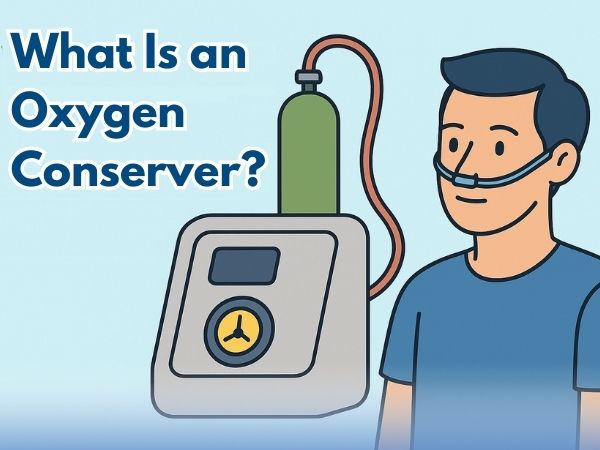
What Is an Oxygen Conserver? A Beginner’s Guide to Efficient Oxygen Use
With an elevated level of air pollutants, lung disorders are on the rise worldwide. According to the American Thoracic Society (ATS), nearly 1.5 million Americans suffering from either lung or heart disorders are dependent on regular oxygen supplementation. Among these, around 50% of patients report problems due to equipment malfunction, the heavy weight of the cylinders that restricts portability, and other issues. To address these issues, oxygen conservers have been introduced. These are small components that, when attached to the oxygen source, ensure an unhindered oxygen flow with minimal issues.

Oxygen supplementation helps improve the patient’s quality of life
In this article, we will dive into the oxygen conservers along with their uses in healthcare. In addition, some of the well-known respiratory product brands have also been linked for the reader’s convenience.
What are Oxygen Conservers?
An oxygen conserver, also referred to as an oxygen conserving device (OCD), is a medical tool employed with the portable oxygen cylinders/tanks. The purpose of using these instruments is to regulate the flow of oxygen from the cylinder to ensure a steady supply. However, the device is designed in a way that it restricts the oxygen flow when the patient is not inhaling. This way, the life of the cylinder or tank can be extended.
Components of an Oxygen Conserver
Oxygen conservers are used for the delivery of oxygen to patients who are dependent on oxygen tanks for breathing. These systems have the following components:
Body
The body of the oxygen conserver is the main structure that holds all the components of the device.
Main Diaphragm
The diaphragm of an oxygen conserver divides the device body into two chambers. Its job is to allow or restrict the flow of oxygen through the outlet passage.
Sensing Diaphragm
The sensing diaphragm of the oxygen conserver divides the second cavity of the device. It is connected to the main diaphragm through a vent and a sensing passage. This component senses the respiration pattern of the patient and opens the main diaphragm when inhalation is detected.
Inlet Passage
The inlet passage of an oxygen conserver delivers oxygen from the oxygen tank or cylinder into the first chamber of an oxygen conserver.
Outlet Passage
The outlet passage works by delivering the oxygen from the oxygen conserver to the nasal cannula or mask worn by the patient.
Flow Control Orifices
The flow control orifice of an oxygen conserver regulates the amount of oxygen delivered to the patient by restricting its flow through the passages.
Vent Passage
The purpose of a vent passage is to keep the second chamber clear of oxygen during the process of inhalation.
Sensing Passage
The sensing passage attaches the outlet passage to the fourth chamber of the sensing diaphragm. This way, the device can efficiently detect inhalation.
Pressure Sensitive Valve
A pressure-sensitive valve is present in some systems that opens and closes the vent passage whenever necessary during the process of breathing.

Oxygen conservers control the flow of oxygen into the nasal cannula
How Does an Oxygen Conserver Work?
An oxygen conserver delivers the right concentration of oxygen to the patient in the following way:
Estimation of Breathing Pattern
The first step involved in the working of an oxygen conserver is the estimation of the patient’s breathing pattern. This is done by a pressure sensor that detects the changes in pressure in the nasal cannula. When a pressure drop is sensed, it indicates that the patient has started to inhale and, therefore, requires oxygen.
Delivery of Oxygen
Once the inhalation is detected, the device activates the mechanism responsible for the delivery of oxygen. In this regard, a bolus or a pulse of oxygen is transferred from the cylinder to the nasal cannula.
Conservation of Oxygen
As soon as the inhalation is over, the patient starts exhaling the air. This is sensed by an increase in pressure that is detected by the device. As a result, the oxygen flow is restricted until the inhalation starts again.
Using Oxygen Conservers: Benefits and Advantages
While using the oxygen conservers, the following benefits can be achieved:
Extended Life of Oxygen Tank
The major benefit of an oxygen conserver is that it extends the overall life of the cylinder. This is because the device shuts down the oxygen supply when the patient is exhaling. This way, oxygen wastage is significantly reduced, which is a common issue while using continuous flow systems.
Enhanced Portability
When an oxygen conserver is used, the oxygen tank or cylinder lasts longer. This subsequently allows the user to carry around a smaller oxygen cylinder for outdoor use without worrying about needing its refilling or replacement on the way.
Increased Cost-Effectiveness
As the oxygen cylinders last for longer, the need for refills or replacement becomes less frequent. As a result, the overall cost of oxygen supplementation is reduced.
Elevated Patient Comfort
The patients who are on oxygen therapy regularly often experience discomfort. Primarily, the issue of dryness or irritation in the respiratory tract is often reported. However, while using oxygen conservers, these problems are less likely to happen. The reason lies in the fact that the system mimics the natural breathing process and is, therefore, highly compatible with the body’s natural breathing process as compared to other systems.

Oxygen therapy with oxygen conservers solves the issue of throat dryness and irritation
Oxygen Conservers at Health Supply 770: Features and Specifications
Oxygen conservers are the medical systems that work in conjunction with the oxygen tanks or cylinders and ensure a consistent oxygen supply. The device also elevates the overall lifespan of the cylinder as it hinders the oxygen delivery every time the patient exhales.
When it comes to learning about oxygen conservers, it is also essential to look into some of the products that many brands manufacture. Some of these well-known brands are also available at Health Supply 770 and have been detailed below, along with their features and purchase links:
Oxymizer® Disposable Oxygen Conserver

US$449.88
Product Details
Oxymizer disposable oxygen conserver is a product that is often employed within home care settings as well as healthcare facilities. These devices work by streamlining the high-flow oxygen therapy as well as by reducing the oxygen wastage. This way, efficient oxygen utilization is ensured along with a 4:1 oxygen savings ratio in comparison to the continuous flow systems.
Moreover, as these Oxymizer disposable oxygen conservers act as an effective alternative to the oxygen therapy methods that offer a continuous flow, they are extremely beneficial for patients who suffer from challenging saturation levels.
Furthermore, these Oxymizer disposable oxygen conservers are more comfortable than the conventional mask-style conservers that hinder activities like eating, drinking, or having a conversation.
The design of these Oxymizer disposable oxygen conservers is also versatile and highly adaptive. This way, their integration with the compressed gas cylinders, concentrators, liquid oxygen systems, etc., is seamless. Resultantly, patients’ needs are well-catered to. The product can be used not only during the day but also while sleeping, resting, or doing a physical activity that involves pursed lip breathing.
In addition, these Oxymizer disposable oxygen conservers are disposable systems that eliminate the need for batteries or device maintenance. Its availability in two styles, i.e., mustache and pendant, allows the user to choose the option that suits them the best. Where the mustache style offers snug fitting beneath the nose, the pendant one can be discreetly set under the clothes around the neck.
As for the parameters, these Oxymizer disposable oxygen conservers are compatible with oxygen and oxygen-rich air. The maximum flow rate they offer is 15 LPM, while the operational temperature for the system is between 5°C and 40°C (41°F to 104°F). When it comes to operational humidity, the value lies between the ranges of 15% to 93%.
Each pack of these Oxymizer disposable oxygen conservers contains 24 disposable items in the above-mentioned price, each of which has a weight of merely 85 grams.
Drive Medical Mini Oxygen Regulator 18302GMN

18302GMN REGULATOR, OXYGEN 0-15LPM MINI
US$36.88
Product Details
Drive Medical mini oxygen regulator 18302GMN is a compact device that works efficiently to deliver oxygen to patients needing respiratory assistance. As the system is smaller in size, it does not fall short in terms of its functionality as compared to the standard-sized regulators.
As for the parameters, these Drive Medical mini oxygen regulators have an inlet pressure range of 300 to 3000 psi, while the outlet pressure is 50 psi. The device also has a barb outlet as well as a CGA-870 connector, in addition to being UL approved.
Moreover, due to their small size, these Drive Medical mini oxygen regulators are easy to carry around and can be fitted into the oxygen carrying bags. The product is also easy to use as it has a single selector knob that adjusts the oxygen flow from 0 to 15 liters per minute (LPM).
Furthermore, these Drive Medical mini oxygen regulators come with a built-in protective contents gauge that displays the oxygen levels in the tank. In addition, a suction relief valve further enhances the safety of the system. These Drive Medical mini oxygen regulators are also lighter in weight and highly durable. These systems also meet the accuracy standards set by the ASTM, CGA, and American National.
Drive Medical Oxygen Regulator 18301G

18301G REGULATOR, O2 DE CYLINDER REG
US$24.88
Product Details
Drive Medical 18301G oxygen regulators are similar to the products mentioned above. However, these do differ in some parameters from the 18302G systems. The oxygen flow rate offered by these Drive Medical 18301G oxygen regulators ranges between 0 and 8 liters per minute or LPM. The protective contents gauge is present to enhance the safety of the device during use.
Moreover, these Drive Medical 18301G oxygen regulators have been constructed using a strong and durable construction material that ensures the longevity of the product while keeping it lightweight and portable. Furthermore, these Drive Medical 18301G oxygen regulators have also been approved by the American National, CGA, and ASTM.
*Note: The prices of these items mentioned in the article are taken from the Health Supply 770 website. These may vary over time.

Hospitalized patients also use oxygen conservers to avoid the side effects of oxygen therapy
The products mentioned in this article, while learning about the oxygen conservers, along with many other medical supplies, can be purchased from Health Supply 770, a reliable name when it comes to medical products. They have a 30-day money-back guarantee and provide your products to you in the shortest possible time. Click the link at the end of the article to check the wide range of respiratory products.
Conclusion
Over the years, oxygen therapy has become common in the US. Many people who suffer from some kind of respiratory disorder, such as COPD, emphysema, sleep apnea, etc., require a consistent supply of oxygen directly into their lungs. This practice not only improves their breathing process but also helps them live a normal life.
In this regard, the use of an oxygen conserver is often recommended. It is a small-sized medical tool that controls the delivery of oxygen into the lungs. The primary benefit of the system is that it only allows oxygen flow when the patient is inhaling. As soon as the exhalation starts, the device automatically restricts the oxygen from moving into the nasal cannula. This way, oxygen wastage is significantly reduced, which further pushes the lifespan of the oxygen cylinder, making it last longer.
Considering their importance, oxygen conservers should be kept in healthcare facilities as well as in home settings to use whenever necessary. For purchasing different types of oxygen conservers as well as other respiratory aid products, reliable vendors like Health Supply 770 should be approached. They ensure the provision of quality products along with satisfactory services.
References
https://www.thoracic.org/patients/lung-disease-week/2022/oxygen-week/