How the Medtronic MiniMed System Integrates with CGM?

Keeping a patient’s blood glucose level within the normal range is the target when it comes to managing diabetes. In this regard, continuous BGL information is required that can be obtained with the use of a continuous glucose monitor. However, when this CGM is connected to a Medtronic MiniMed insulin pump, the assembly automates the estimation of insulin dosage.

Delivery of the correct insulin dose effectively helps in balancing the patient’s BGL
In this article, we will go through the integration process of Medtronic MiniMed systems with continuous glucose monitors. In addition, some of the well-known CGM brands have also been linked for the reader’s convenience.
What is the Medtronic MiniMed System?
Medtronic MiniMed systems refer to the automated insulin delivery (AID) devices that have been introduced in the market for effective management of type 1 diabetes. One of the best Medtronic MiniMed systems is the MiniMed 780g that comes with SmartGuard technology.
This enables the system to automatically adjust the insulin dose to be administered to the patient based on the received BGL data from a CGM sensor. The Medtronic MiniMed systems are considered ideal for patients who require 8 or more units of insulin on a daily basis.
Medtronic MiniMed 780g Automated Insulin Delivery Pumps: An Introduction
Being the current flagship of Medtronic insulin pumps, the MiniMed 780g AID pumps are automated devices designed for insulin delivery. These systems have been designed to carry the latest technologies, like the SmartGuard technology that is responsible for auto-adjusting the insulin doses. In addition, the Meal Detection technology also adjusts the dose based on the amount of consumed carbs.
The device is also capable of holding up to 300 units (3.0 mL) of U100 rapid-acting insulin due to its high reservoir capacity. Like most CGMs, these Medtronic MiniMed 780g insulin pumps are also water-resistant and can be used under water at a depth of 2.4 meters (8 feet) for up to 30 minutes.
Why and How the Medtronic MiniMed System Integrates with CGM?
For their working, the Medtronic MiniMed systems need to be integrated with a suitable continuous glucose monitor (CGM). The question often asked is ‘How’? But let us address the ‘Why’ first:
Need for Integration of the Medtronic MiniMed System with a CGM: Addressing the ‘Why’
As mentioned earlier, the Medtronic MiniMed insulin pumps work by automatically adjusting the dose of insulin to be given to a diabetic patient. To do so, the patient’s real-time BGL data is required, which is provided by a continuous glucose monitor. For this purpose, both the Medtronic MiniMed insulin pump and a suitable CGM system need to be integrated in a seamless manner.
Use of Medtronic Guardian Sensor 4 with the Medtronic MiniMed 780g System
Usually, the Medtronic Guardian Sensor 4 is recommended to be used with the Medtronic MiniMed 780g automated insulin delivery pumps. Both devices are known to seamlessly integrate owing to their full compatibility.
Where the Guardian Sensor 4 checks the BGL levels from the interstitial fluid every 5 minutes, the Medtronic MiniMed insulin pump takes this data to perform micro-adjustments in the insulin levels, leading to better management of diabetes.
Furthermore, integration of these two devices also eliminates the need of manual calibration of any of them, which is done using the fingerstick method. This way, daily use of the assembly becomes easy.
Method of Integrating the Medtronic MiniMed AID System with a CGM: Addressing the ‘How’
Once we have understood the need for integration of a Medtronic MiniMed AID system with a suitable CGM, the next step is to learn how it is done. In this regard, the following section summarizes the process of connectivity between the Medtronic MiniMed 780g AID system and a Guardian Sensor 4:
Pair the Sensor to the MiniMed AID Pump
Before starting to use the CGM sensor, it is essential that it gets paired with the Medtronic MiniMed AID pump so that the two devices can wirelessly communicate with each other. In this regard, fully charge the transmitter by connecting it to the charger and placing it next to the pump.
Select ‘Pair New Device’ and remove the transmitter from the charger. Select the ‘Select Device’ option and choose the CGM device based on the serial number indicated on the back of the transmitter. Wait for ‘Pairing Successful’ to appear on the screen, and the sensor also signals the connection.
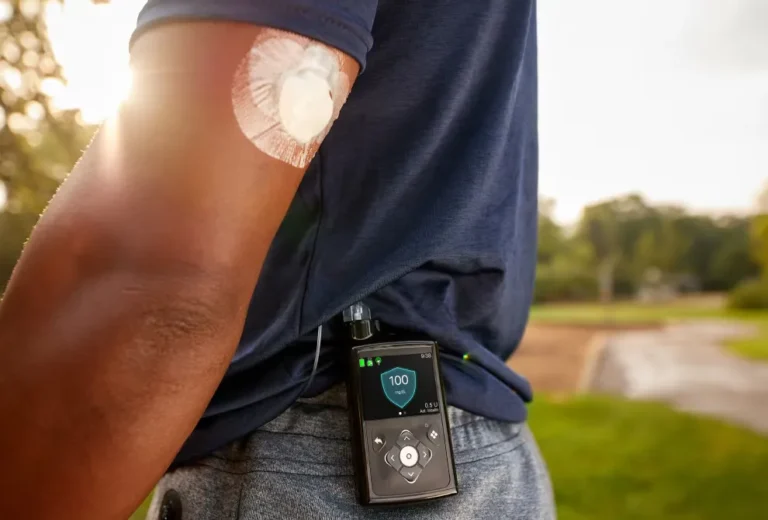
BGL data from CGM is directly sent to the Medtronic MiniMed pump
What If My Medtronic MiniMed Pump Can’t Find the Transmitter?
If the sensor and the MiniMed pump cannot detect each other, select ‘OK’ when the system shows ‘Device Not Found’. Then press the ‘Select Device’ option. At this stage, make sure that the device is ready to be paired with the pump.
Also, if the system is close to any electronic devices, such as smartphones or other wireless devices, the reason behind the problem might be the interference. In such cases, keep the sensor and the Medtronic MiniMed pump away from the wireless devices and close to each other. Now, try pairing the devices once again.
Unpair the Sensor and MiniMed AID Pump
As only one transmitter can be connected to the pump, unpairing of the two might be required. To do so, go to the ‘Paired Devices’ option on the pump and select the serial number of the CGM connected to it. Then, go to ‘Device Info’ and select ‘Unpair’. Confirm with ‘yes’ to proceed.
Benefits of Integrating a Medtronic MiniMed Insulin Pump with a CGM
Once the Medtronic MiniMed insulin pump is integrated with a continuous glucose monitor, this unified system handles the insulin delivery process efficiently. Here, the CGM helps the Medtronic MiniMed insulin pumps to maximize their productivity based on the crucial BGL data they provide. Some of the benefits achieved by this assembly include the following:
Prevention of Hyper- and Hypoglycemia
This closed-loop system helps in the proactive management of fluctuations in blood glucose levels. This is because the CGM detects the highs and lows in the patient’s sugar levels and signals the Medtronic MiniMed insulin pump accordingly. The pump, in turn, adjusts the level of insulin in a way that the condition is managed before the patient goes into a state of hyper- or hypoglycemia.
Increased Time-in-Range
The seamless integration of the Medtronic MiniMed 780g automated insulin delivery pumps with the Guardian Sensor 4 also increases the time in range (TIR) by 70 to 80%. This means that, up to 80% of the time throughout the day, the patient’s BGL remains within the normal range of 70 to 180 mg/dL or 3.9 to 10.0 mmol/L. As a result, diabetes remains well-controlled.
User-Independent Insulin Dosing
In the case of conducting a fingerstick test for the estimation of BGL, followed by calculating the dose of insulin, significant user input is required. Although the task is not impossible to conduct, it does require more time and often lead to dosage inaccuracies as most patients have a tendency to miscalculate. Therefore, using a Medtronic MiniMed automated insulin delivery pump with the Guardian Sensor 4 eliminates the need for user input, leading to high dosing accuracy.

CGM sensors are easy to use and can be worn for 7 to 14 days
Continuous Glucose Monitors at Health Supply 770: Features and Specifications
Continuously monitoring a person’s glucose levels is necessary for the estimation of how well their diabetes is being controlled by the suggested lifestyle modifications as well as therapeutic interventions. This was previously done by fingerstick tests, a method known for being painful and uncomfortable. However, the use of CGM sensors has solved the problem.
However, when it comes to learning about the Medtronic MiniMed systems, it is also essential to look into some of the CGMs that many brands manufacture. Some of these well-known continuous glucose monitors are also available at Health Supply 770 and have been detailed below, along with their features and purchase links:
Medtronic Guardian Sensor 4 For 780G BX/5

Medtronic Guardian Sensor 4 For 780G Box of 5
Product Details
Medtronic Guardian sensor 4 is a CGM sensor that is known for its flexibility and vast usage. These monitors provide access to real-time blood glucose levels of a patient, leading to proper estimation of the BGL levels throughout the day and night.
The reliability of the product is reflected in its results. However, the system has also been put to the test extensively and then given approval by the FDA. In addition, these have high versatility and can, therefore, be used among adults as well as children who are above the age of 7.
Moreover, the device can be connected to a suitable receiver or a smartphone through a relevant app. These systems receive the BGL data from the sensor and display it in the form of values, trends, and graphs. When it comes to wear time, the sensor can be worn for up to 7 days.
As these Medtronic Guardian sensors are also capable of detecting the highs and lows in a patient’s blood glucose levels, they send this information to the connected Medtronic MiniMed systems, which, in turn, adjust the dosing of the rapid-acting insulin. Additionally, this assembly also changes dosing based on the under-estimated carbohydrate count, along with the application of a correction factor in case of occasionally missed meal doses.
Furthermore, as these Medtronic Guardian sensors are prescription-only products that are recommended by the healthcare providers to patients who require a continuous estimation of their BGL levels. When purchased, the sensor comes in proper packaging to prevent contamination, and should only be taken out at the time of usage.
Dexcom G7 Glucose Sensor 1 unit

Dexcom G7 Continuous Glucose Monitor Sensor 1 Unit
Product Details
Dexcom G7 glucose sensor 1 unit is one of the best CGM systems available in the US market. The product comes with a single-push installation process that makes it easy to use for patients as the services of a caregiver are not required. To make it even easier, a disposable applicator holds the sensor to use it as such. Therefore, assemblage is also not required. Once inserted under the skin, the sensor gets activated after a warm-up time of 30 minutes.
In addition, these Dexcom G7 glucose 1 unit sensors can also alert the patient in case of a coming risk of hyper- or hypoglycemia as they detect the highs and lows in the blood glucose levels. As a result, measures can be taken beforehand to avoid the condition. As for their wear time, these Dexcom G7 sensors are suitable for use for up to 14 days, probably the longest possible usage duration for a CGM sensor.
Moreover, these Dexcom CGM sensors also eliminate the need of manual calibration, done by conducting fingerstick tests, as the device comes with an automatic calibration feature that works based on a factory-set algorithm. Furthermore, their soft and flexible construction keeps the patient comfortable.

The use of AID pumps makes insulin delivery quick and easy
The products linked in the article, while learning about Medtronic MiniMed systems, along with many other medical supplies, can be purchased from Health Supply 770, a reliable name when it comes to medical products. They have a 30-day money-back guarantee and provide your products to you in the shortest possible time. Click the link at the end of the article to check the wide range of diabetic care products.
Conclusion
Medtronic MiniMed systems are the automated insulin delivery pumps that take BGL data from a connected CGM system and auto-adjust the dose. This connection helps resolve the issue of inaccurate insulin dosing, among others. Here, properly pairing the two systems following the steps summarized in this article is important to achieve the required connection.
Considering their importance, CGMs are an integral part of diabetic care and are, therefore, needed within all the relevant healthcare facilities as well as in home settings. For purchasing different kinds of medical devices, including the Medtronic MiniMed systems, reliable vendors like Health Supply 770 should be approached. They ensure the provision of quality products along with satisfactory services.